
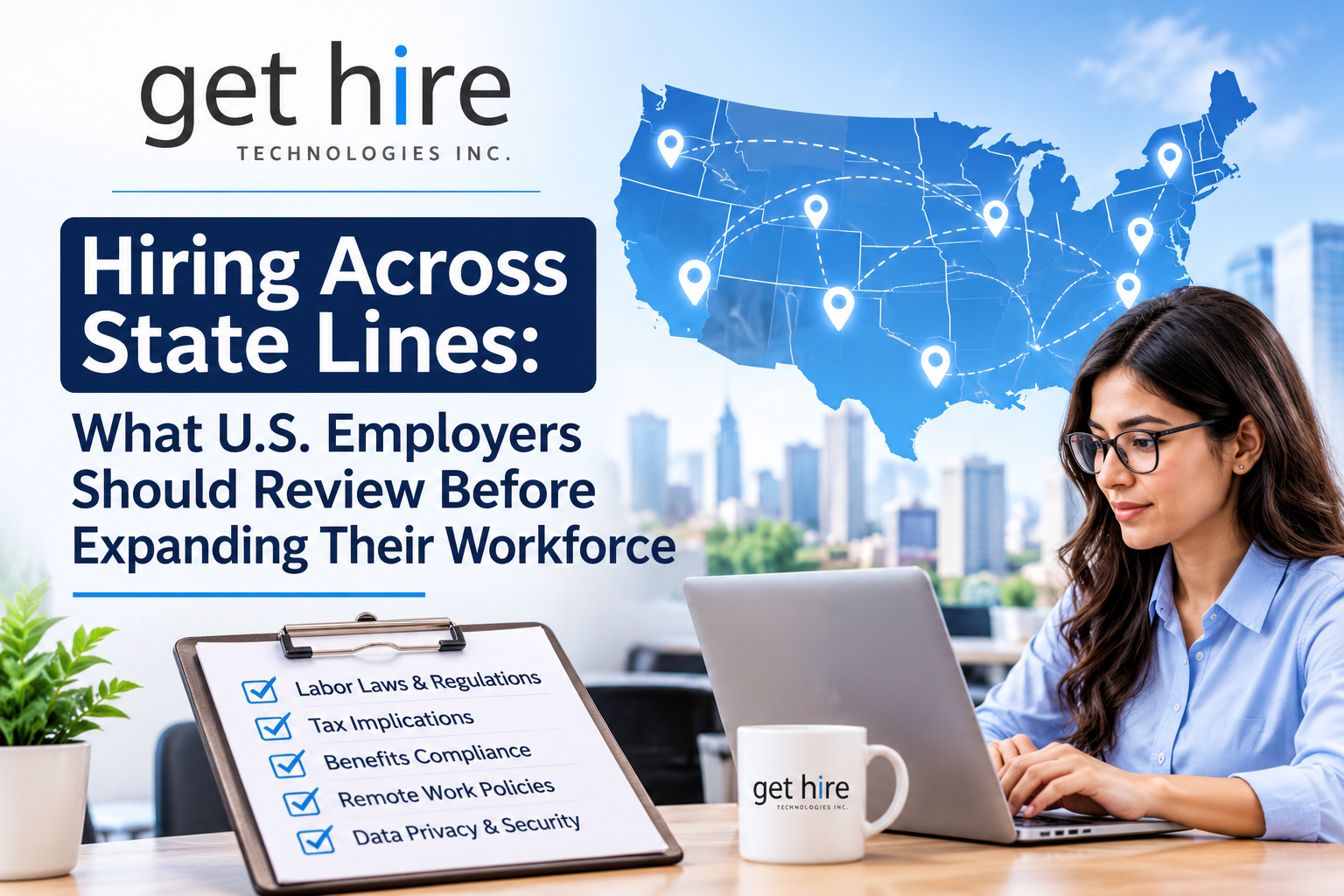


By hiring talent in another state, businesses can access top-tier talent and sidestep geographic limitations and fuel growth. It also affects the compliance responsibilities of the employer, however. Having workers that fall into one jurisdiction and the company into another raises issues with payroll, benefits, employment law, workforce management, etc.
Employers will want to explore the realities and legalities of each location before expanding a workforce across state lines. A leading staffing & recruitment agency in USA can provide a leading edge in the ability to find qualified talent, deal with logistics and cut down on administration.
What makes multistate hiring a trend to watch?
Along with remote and hybrid working, companies have also found it easier to recruit outside their local markets. But many physical worksite rules apply to an employee, but depend on the state in which they work. Employers could be required to perform a registration, withhold taxes, provide coverage in accordance with local employment standards and follow other requirements imposed by the state agencies.
Payroll and compliance often hinges where work is being done and not the company’s offices.
This is particularly crucial for employers who employ remote employees. When an employee is working from home from another state, a company from a different state may be responsible for paying for their payroll, taxes and employment requirements in that state.
Check Payroll or Tax Requirements
One of the first places to check for employers is payroll. The income tax withholding, unemployment insurance, reporting and local tax requirements differ from state to state.
Employers need to be ready for:
- Enroll in state withholding and unemployment insurance accounts (when needed).
- Withhold and remit taxes as per the location of work.
- Research to keep track of the state, county and city taxes.
- Report new hires as per State regulations.
- Up-to-date payroll systems for notifying of employee relocation.
- Keep good log records of workplaces and pay.
If your company registers in a new state, you will need to register with the State tax agency and unemployment program before you payroll in a new state. A staffing firm in USA can assist business employers in knowing which hiring model they can employ in order to minimize administrative duty, particularly for temporary or project jobs.
Know Differences between Employment Laws
The employer must go through the wage and hour regulations, overtime pay, the frequency of pay, paid leave policies, meal or rest breaks and notice requirements.
| Compliance area | What employers should review |
|---|---|
| Minimum wage | State, county and city wage requirements |
| Overtime | Daily and weekly overtime rules |
| Paid leave | Sick leave, family leave and vacation policies |
| Pay transparency | Salary range disclosure and posting rules |
| Worker classification | Employee versus contractor status |
| Anti-discrimination | State-specific protected categories and notices |
| Data privacy | Employee data collection and privacy requirements |
Because employees’ headcount is typically correlated to the state where they primarily work, requirements may differ by jurisdiction; across-the-board determinations are unlikely to occur, SHRM elaborates. A policy implemented in one state should not be implemented in all states by employers.
Review Workers’ Compensation
Another one of the major concerns is workers’ compensation. Employers might require coverage from a state they do not have an office in, even if they don’t have one in the state.
Employers should also check with them to determine if the state is part of their current policy before employing someone in a different jurisdiction. They will need to add the state if it doesn’t; otherwise, they will need separate coverage.
Employer’s duty to provide workers’ compensation coverage also rapidly evolves upon the hiring of workers in a new state.
Employers should also check the procedures in place for reporting injuries and their return-to-work policy as well as coverage stipulations in the state. These factors are seldom taken into account until that day arrives.
Communicate Policies on Remote Work
Employers need to make the determination of whether employees can come to work from any state, from approved states or from specific states.
When developing a remote-work policy, it is essential to consider the following topics:
- The process of relocating to approved work sites and issuance of relocation notice.
- Rules about hours of work, availability, and the expectations for time tracking.
- Equipment access, Internet and home and office assistance.
- Data security and data privacy needs.
- Move from state to state and from place to place or temporary work sites.
- Tax & benefits considerations of Relocation.
Employer should ask employees to inform the employer of any change of the main place of work. Results of a move can impact payroll taxes, meaning eligibility for certain benefits, insurance and employment laws.
Review and Update Leave and Benefit Policies
Benefits may get more complicated when workers are employed across state lines. State regulations and where employees work could impact their health insurance, retirement benefits and paid leave and disability.
Employers should also see if state benefits, such as paid family leave, disability insurance or paid sick leave apply.
Staff personnel should be aware of the benefits they are entitled to receive, how they become entitled for leave and what occurs if they relocate to another state.
Consider Worker Classification
Though it may be more streamlined, misclassification likely poses a substantial financial and legal liability. Employers should consider categorization tests, level of control, the nature of the work and the payment and classification structure state by state.
Depending on three state laws, a contractor can be regarded as an employee when he performs the duties of an employer. Under some state laws, a contractor can be considered an employee when he works like an employee. Employers must review with a legal or HR professional the contract, work, supervision and compensation prior to starting to hire out-of-state contractors.
Follow a Structured Hiring Process
By having a consistent hiring process, employers can minimize the risk and have a high-quality candidate experience. The top staffing companies in USA or top recruiting companies in USA can assist the company in sourcing, screening, coordinating onboarding and workforce compliance.
Employers should have a checklist, which will comprise:
- Verifying the employee’s initial work situation.
- Reviewing employment requirements for each State.
- Revising offer letters and contracts of employment.
- Setting up payroll and benefit programs.
- Fulfilling necessary registration and new-hire reporting.
- Documenting remote-work expectations.
- Training the policy managers on site policies.
Any such process should precede hiring and follow payroll or compliance issues.
Work With the Right Partner
Employment needs can be met more effectively, when the right staffing partner is in place for the employer. To help employers manage hiring needs, Get Hire Technologies provides all types of contract help, permanent placement, executive search and remote employee help services through appearing to build flexible staffing teams.
Employers should ask these questions when assessing a staffing & recruitment agency in USA: If they have experience in hiring candidates in multiple states, how do they go about screening candidates? Do they provide payroll support, etc., and do they offer conversion to contract-to-hire? The right partners are more than just sending resumes; they are assisting employers in making informed workforce decisions.
Final Thoughts
Cross-border expansion to access additional talent and bolster growth is one way to grow a workforce across borders in the U.S. However, success comes if you are prepared. Payroll, employment law, workers’ compensation insurance, benefits and remote-work laws are important considerations to have in place before hiring in a new state.
Having a clear process and the right recruiter partner-capabilities can expand business lines-of-business across state lines, minimize compliance exposurlines of businesshe employee experience.
Frequently Asked Questions (FAQs)
Why is location an important consideration for multistate hiring?
The location where a worker primarily works will often dictate their state payroll, tax, employment law & benefits requirements. Sometimes the employer will have to register or comply in the state in which the employee works, regardless of where the employer is based.
What will employers need to know about payroll requirements before bringing someone on board in a new state?
Employers should check state income tax withholding, unemployment, new hire reporting requirements, local taxes and payroll requirements. They should also have payroll systems that they need to update when an employee moves.
Is there a requirement for workers’ compensation coverage in all states in which employees work?
Often, yes. Employers need to decide if they have an existing workers’ compensation policy in place that covers the state where their employee is working. Otherwise, they will likely have to pay for additional coverage or insurance policies on their own.
Can employers allow employees to work from any state?
Employers have the option to work remotely; however, there should be established guidelines in place. In general, an employee should advise the company before he or she moves to a primary work activity site, as a change of primary work activity site could have tax, benefit, insurance and employment-law consequences.
What role can a staffing & recruitment agency in USA play in multistate hiring?
A staffing & recruitment agency working in USA can assist employers who want to find the perfect person to recruit as their candidates, screen them, complete a contract or direct hire job and plan their workforce. This may help to limit administrative hassles and make it easier for employers to recruit the right personnel from other states.