


Let’s be honest. If someone told a college graduate ten years ago that their dream career might start with a six-month contract or a permanent job, they probably would have laughed. The usual path was to finish school, get a job, move up the career ladder and retire with a watch.
That plan has changed. Today’s young professionals are not choosing contract work because they have no option. They are choosing it on purpose. They want the freedom to work on projects, to travel and to have control over their work. This blog is about why this shift is happening, what it means for the workforce and why companies that don’t adapt to this trend will miss out.
The Old Promise Lost Its Shine
For a time, the deal between employers and employees was simple. You work hard and give your employer loyalty. They give you stability and benefits. Then came layoffs, restructurings, and “strategic realignments”. Entire departments were closed. Employees were let go. Young professionals saw their parents lose their jobs after working for twenty years. The lesson was clear. Job security is not guaranteed. When the old model stopped working, a new generation started making its rules.
Freedom Is the New Benefits Package
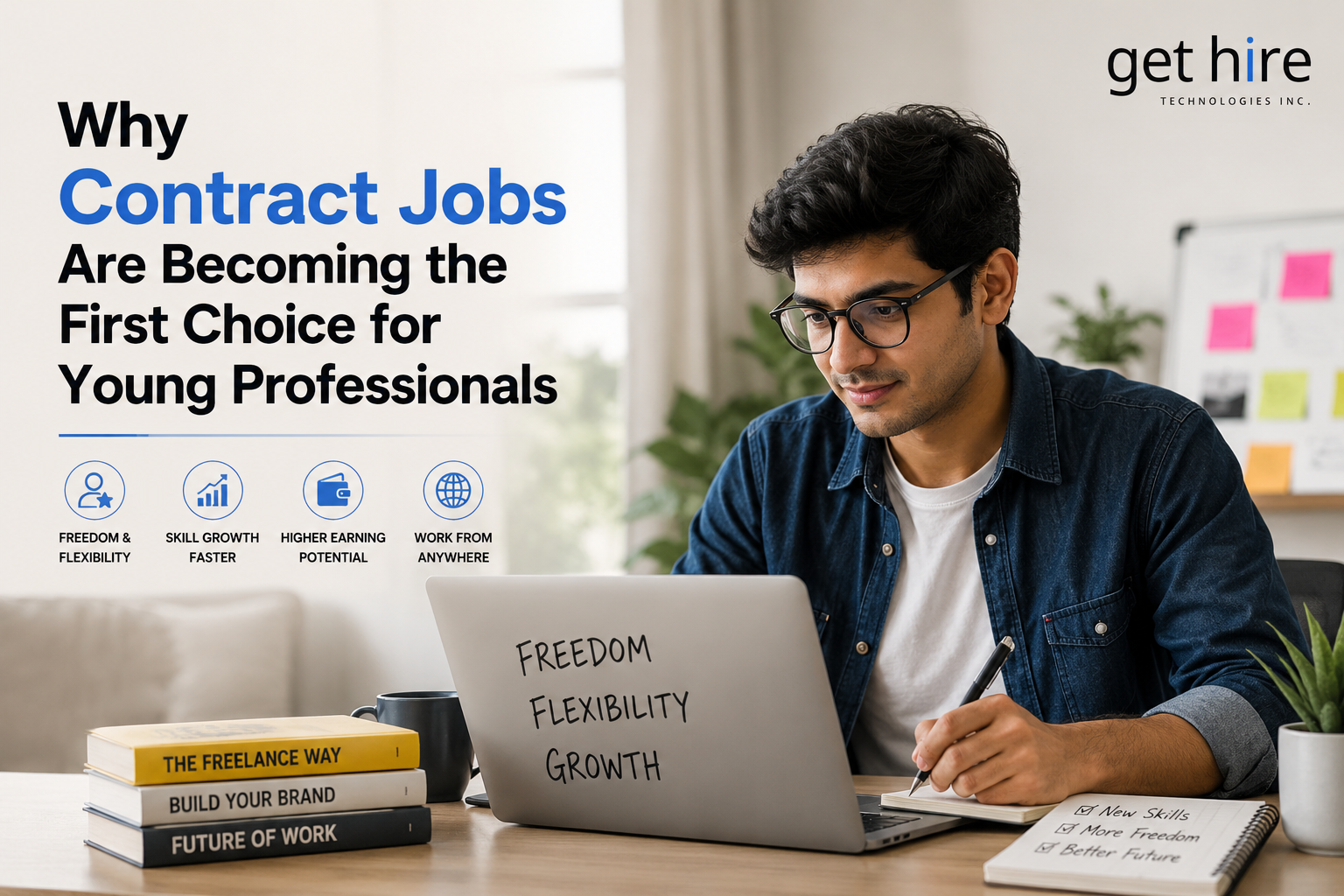
Young professionals value autonomy. They want to choose their project work from anywhere and have the freedom to say no to a manager who micromanages. Contract work gives them that freedom. A contractor works on a project for a set period. This means they can work on projects, travel and have control over their work. For a generation that has seen people get stuck in jobs, this freedom is worth more than a 401(k) match.
Skill-Building at Warp Speed
Employees often do the same job for years. Contract professionals work on projects, see different technologies and learn new skills. Each project is a chance to learn and grow. It’s like reading a book. A full-time employee reads one book slowly. A contractor speed-reads across a library. For professionals who are still figuring out their skills, this breadth is valuable. They discover preferences, build a portfolio and develop adaptability.
The Money Conversation Nobody Wants to Have
Let’s talk about pay. Contract roles, in tech, finance and consulting often pay more per hour or project. This is partly because contractors don’t get benefits. For professionals without a mortgage or dependents, the math can work out well. A six-month contract at a rate can pay more than a full year at a “stable” salary.
Companies Are Catching On (Slowly)
Organizations are also using contract talent. They need skills for specific projects, not permanent employees. They need to scale teams up and down. Contract arrangements work for both sides. The professional gets variety and freedom. The company gets flexibility and access to niche expertise. The organizations that adapt to this shift will have an advantage. Those that stick to the model will lose talent to more adaptable competitors.
The Honest Caveats
Contract work is not perfect. Income can be unstable. Benefits gaps require planning. Some clients are difficult. Contract work is not for everyone. The point is that it’s now an option. The workforce is diversifying. Some professionals will thrive in roles. Others will build careers as contractors. The healthiest outcome is that the choice exists and is respected.
The Bottom Line
Young professionals are not fleeing stability. They are redefining it. For them, stability is having a skill set, a professional network, a portfolio of work and the confidence to land on their feet. Contract work delivers that. That’s why it’s moved from the margins to the mainstream.
At Get Hire Technologies, the best staffing agency in USA, we see this shift every day. We work with professionals who are looking for a great project. We work with companies that are looking to solve a problem.
The future of work is not permanent or contract. It’s a choice. The professionals and companies that embrace that choice will thrive.